

Our Curriculum
Two philosophies, one way of learning
At Little Star, our curriculum is built on two ideas we believe belong together: the Reggio Emilia approach, which sees every child as a strong, capable and independent learner, and hygge — the Scandinavian art of slowing down, feeling safe, and finding joy in the everyday. On their own, each shapes a wonderful early years setting. Together, they shape ours.
Children as strong, capable learners
We take our lead from Reggio Emilia’s belief that children are not empty vessels waiting to be filled, but confident researchers with their own ideas, questions and theories about the world. Our practitioners don’t rush to give answers — they sit alongside children, ask good questions, and help them follow their own curiosity as far as it will go.
You’ll see this in how our rooms are set up. Materials are open-ended and inviting rather than fixed to one “right” outcome, so a child can choose how to explore, not just what to explore. We call this the environment as a third teacher — a space that gently invites investigation, rather than one that tells a child what to do next.
Learning at an unhurried pace
Hygge asks a simple question: what happens when we stop rushing? In our rooms, that means giving children the time to stay with something — to watch a snail cross the path for twenty minutes, to build the same tower six times until it’s just right, to sit quietly with a book rather than move briskly on to the next activity.
This slower, more unhurried pace — sometimes called slow pedagogy — isn’t a lack of structure. It’s a deliberate choice to value depth of experience over ticking off activities. Our spaces reflect this too: soft lighting, natural materials, calm corners for rest and connection, and moments built into every day for children (and the adults who care for them) simply to be present, together.
Creativity and science, hand in hand
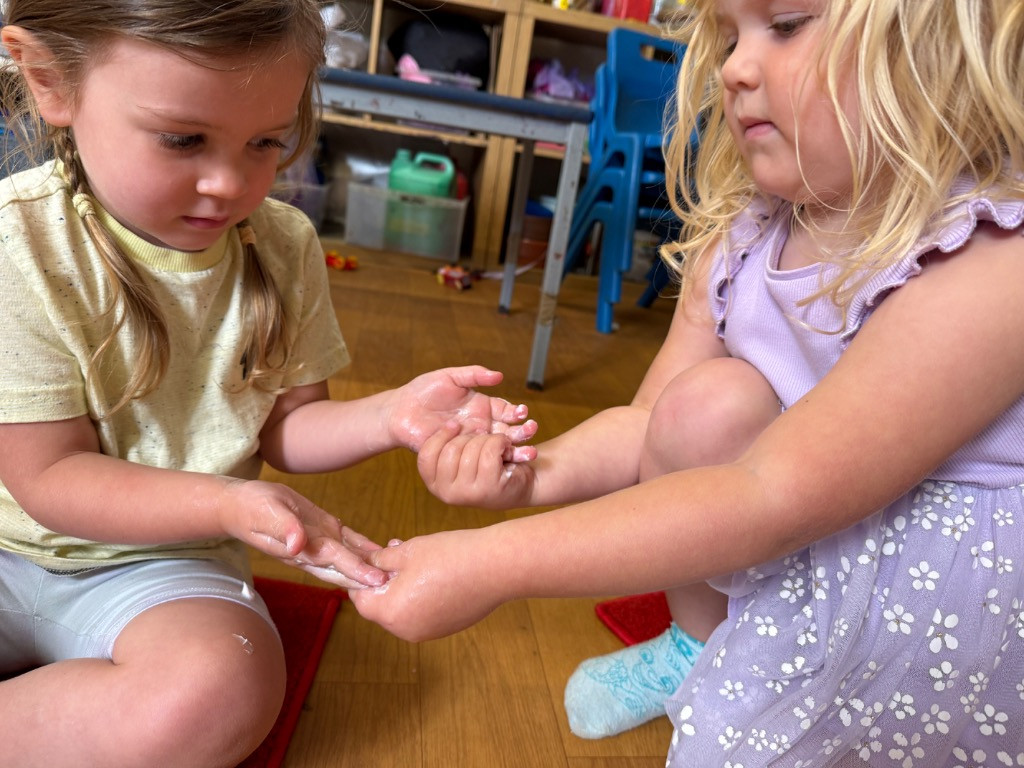
We don’t separate “creative” time from “science” time — in the early years, they’re often the same moment. Mixing paint is chemistry. Building a den is engineering.
Watching ice melt in the garden is a science experiment and a small wonder, both at once. Our curriculum weaves creative expression and scientific curiosity together, so children learn to observe, question, experiment and imagine as part of one continuous thread, not separate subjects.
Rooted in the natural world
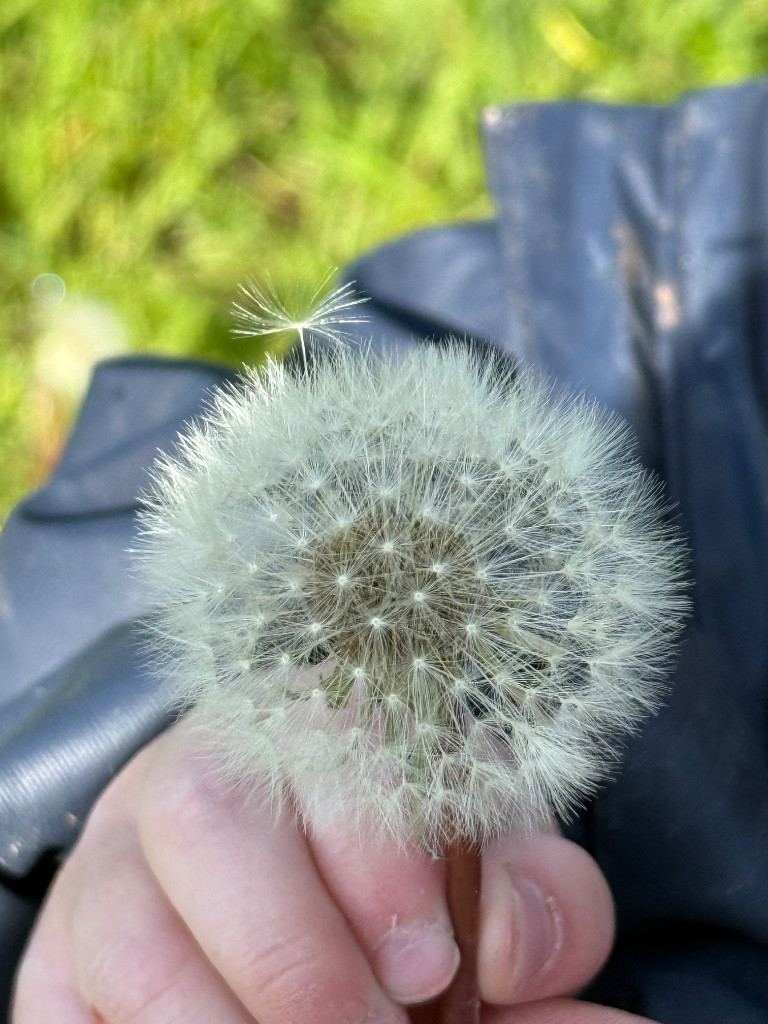
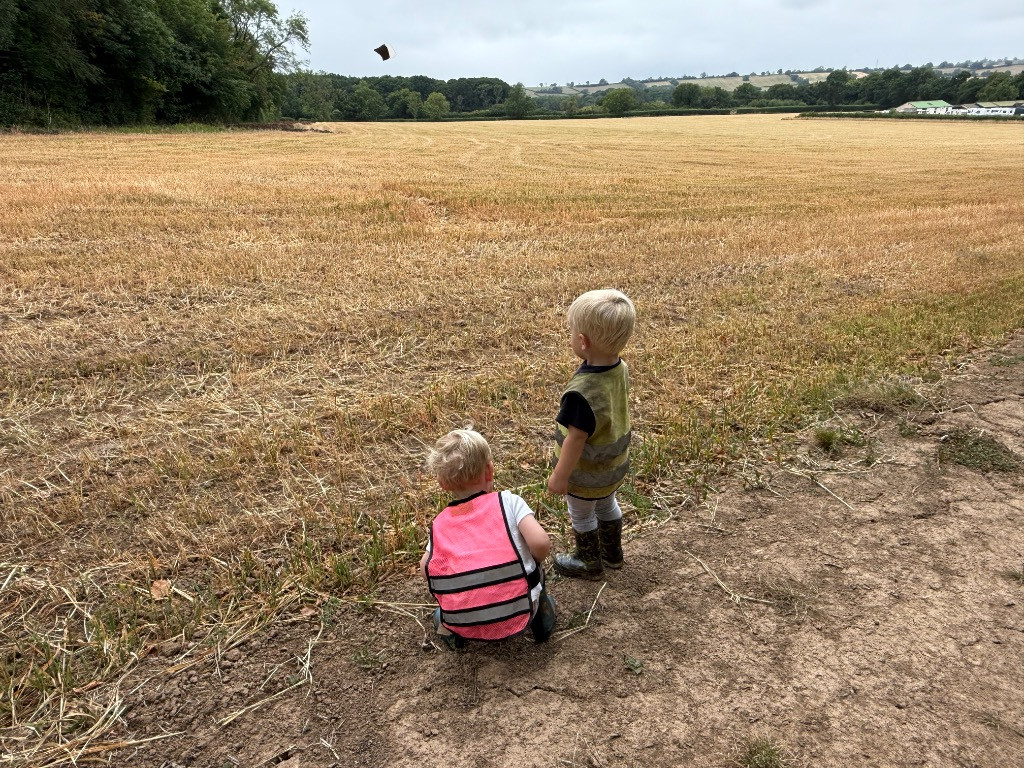
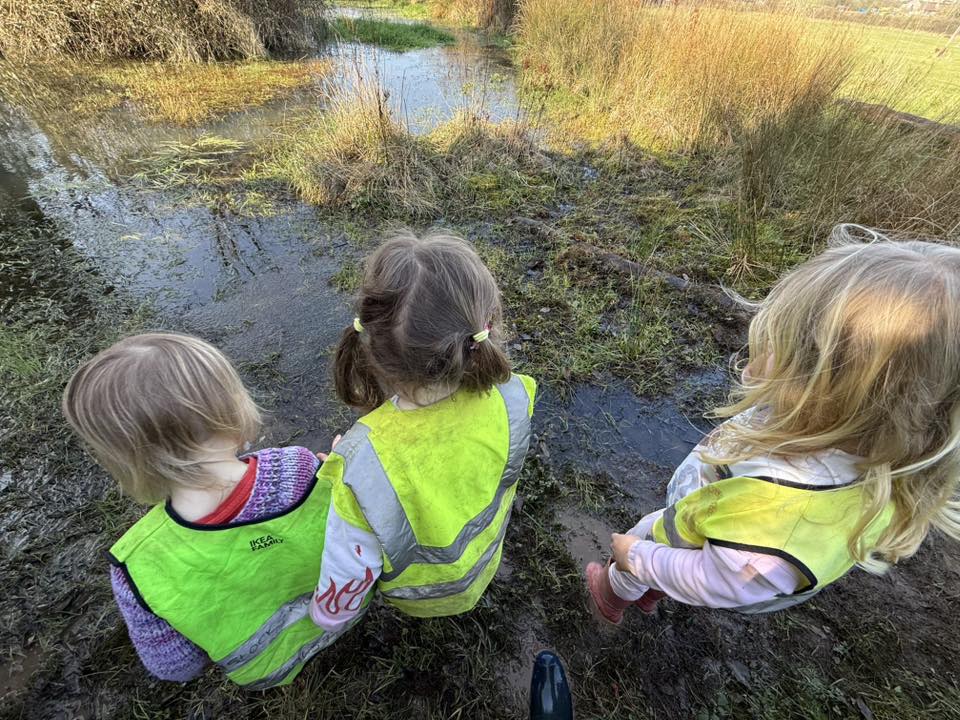
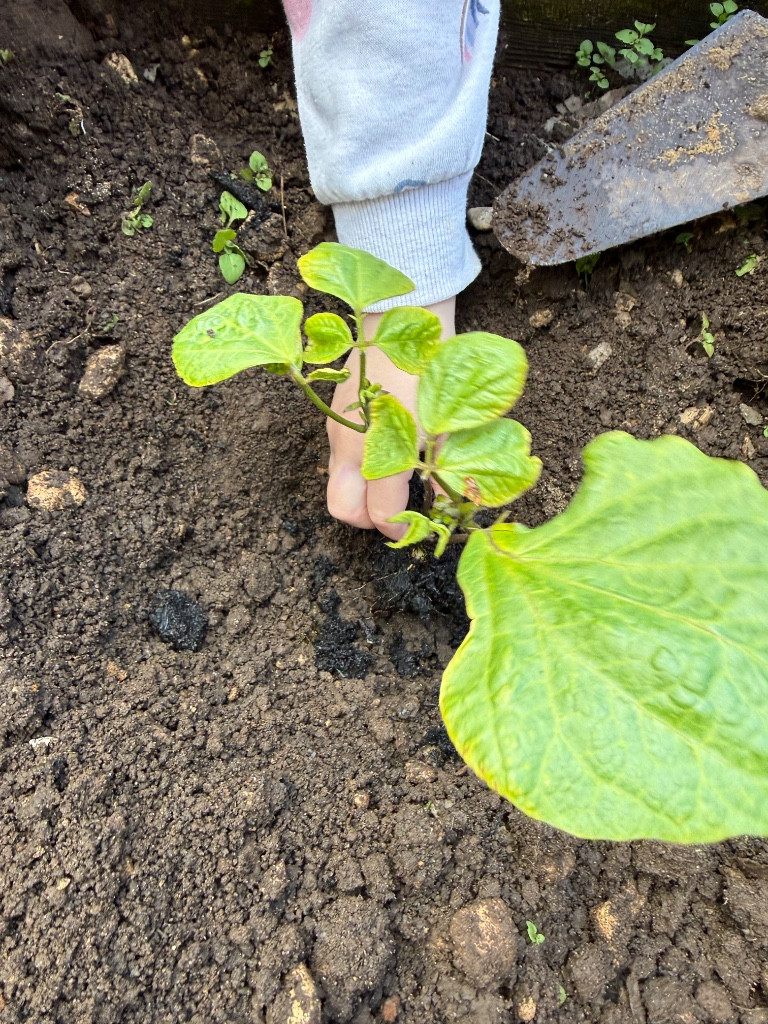
Nature is one of our richest resources, and we use it generously — outdoor play in all weathers, real plants and living things to care for, loose parts collected from the garden, and quiet time spent simply noticing the world outside. Being outside slows everyone down in the best way, and it gives children endless, ever-changing material for their play, their questions and their learning.
Led by children’s voice
Underneath all of it is one belief: children have the right to be heard, and their interests are a legitimate starting point for learning. We plan around what children are genuinely curious about, we listen closely — through their words, their play and their marks on paper — and we let their questions steer where a project goes next. A curriculum shaped with children, not just for them, is one they feel genuinely invested
in.
What this looks like, day to day
- A morning that isn’t governed by the clock, where children can finish what
they’ve started - Open-ended materials — natural loose parts, art materials, everyday objects — that can become anything a child imagines
- Calm, cosy spaces alongside spaces for big, physical exploration
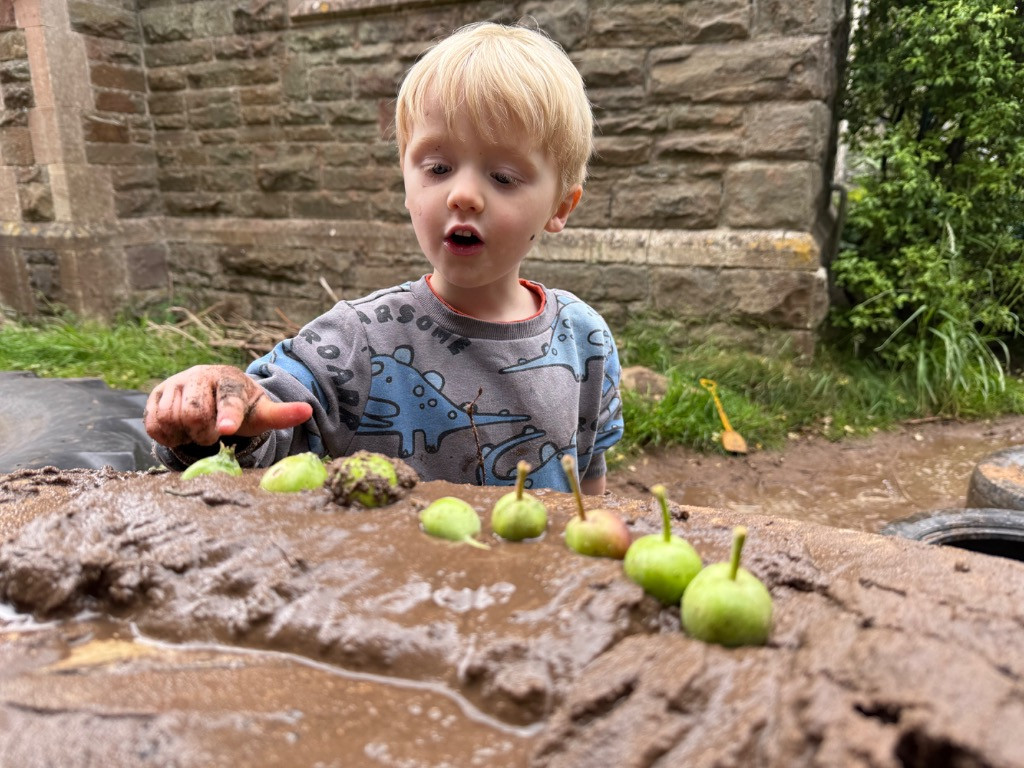
- Real tools for real investigation: magnifying glasses, scales, seeds, water, mud
- Documentation of children’s ideas and projects, so their thinking is visible and valued
- Time outdoors, in all seasons, as a core part of the day rather than a break from it
Grounded in the EYFS
All of this sits within, and goes beyond, the Early Years Foundation Stage
framework. We meet every statutory learning goal — but we get there through an approach that respects how young children actually learn best: slowly, curiously, and on their own terms.
Come and see it for yourself
The best way to understand our curriculum is to spend a little time in our rooms.
We’d love to show you around — get in touch to arrange a visit.